
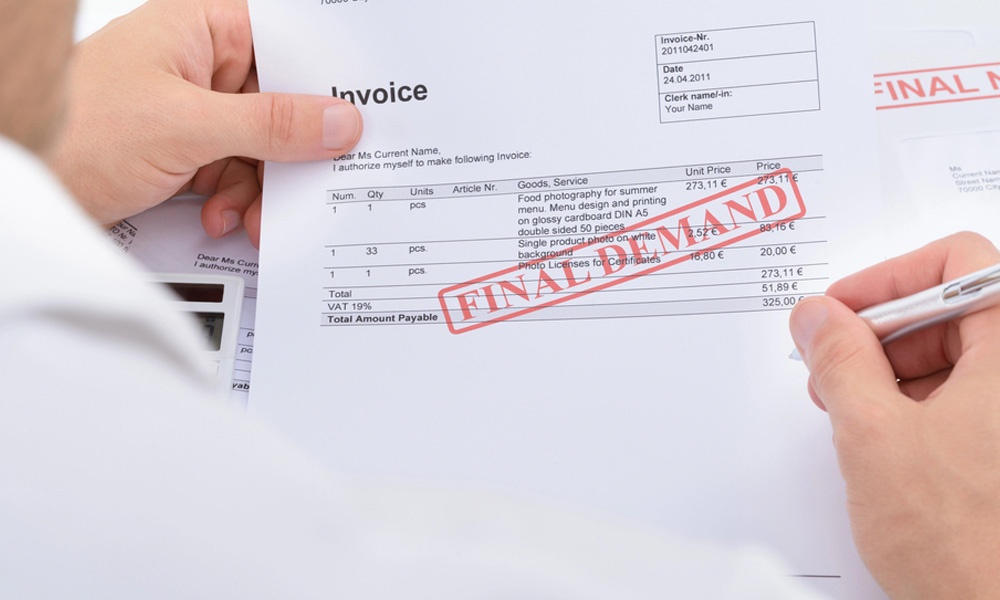
Commercial debt recovery is one of the most practically consequential areas of business risk management, and one of the most consistently mishandled. The failure of a business to recover money owed to it is not merely a financial problem. It consumes management time, distorts cash flow, and in its more serious manifestations, represents a direct transfer of value from the creditor to a debtor who has chosen not to pay.
In my experience, the businesses that recover commercial debts most effectively are those that treat the recovery process as an investigative and strategic exercise, not simply a process of escalating contact and legal threats. Understanding why the debt is unpaid, what the debtor’s true financial position is, and what the realistic enforcement options are, is what separates a recovery that succeeds from one that stalls at every stage.
Why Commercial Debts Go Unpaid
Commercial debts go unpaid for several distinct reasons, each of which calls for a different response. Understanding which applies in a specific case is the starting point for any effective recovery strategy.
Cash flow difficulty: the debtor is experiencing genuine short-term financial pressure and cannot pay currently but has assets and income that would support payment over time. The appropriate response is structured negotiation, potentially supported by a formal payment arrangement.
Deliberate non-payment: the debtor has the ability to pay but has chosen not to, either because they dispute the debt, because they are prioritising other creditors, or because they are testing how long the creditor will tolerate non-payment. The appropriate response is prompt escalation, including the threat and reality of legal action.
Evasion: the debtor is avoiding contact, has moved address, or has become unreachable. The appropriate response is skip tracing and, once located, service of proceedings combined with interim relief where the asset picture supports it.
Insolvency: the debtor is genuinely insolvent and has no ability to pay. The appropriate response depends on whether the debtor is an individual or a company and whether there are any recoverable assets or transactions that can be challenged.
Corporate dissolution: the debtor company has been dissolved. The appropriate response involves investigating the directors personally and, where the dissolution was improper, potentially applying to restore the company to the register.
Recovery Options
Letter before action and negotiation: the starting point for most commercial debt recovery, and effective in a significant proportion of cases where the debtor is a legitimate business with a reason to protect its credit reputation.
Statutory demand: a formal demand under the Insolvency Act 1986 that, if unsatisfied within 21 days, creates the presumption of insolvency and supports a winding-up petition. Most effective against companies that have a strong reputational incentive to avoid insolvency proceedings.
County Court claim and judgment: the standard route for obtaining a court order for payment, which then supports enforcement action. Effective where the debtor is locatable and has accessible assets.
Winding-up petition: a petition to wind up a company on the grounds of inability to pay its debts. Carries significant reputational consequences for the debtor company and is frequently used as a pressure mechanism rather than pursued to a winding-up order.
Charging order and order for sale: enforcement against the debtor’s real property, requiring identification of property with available equity. An effective mechanism where the debtor owns unencumbered or lightly encumbered property.
Investigative Approaches
Investigation supports commercial debt recovery at every stage of the process. Pre-litigation, it provides the intelligence needed to select the right recovery strategy and to identify the assets that will support enforcement. During proceedings, it provides the evidence needed for interim relief applications. Post-judgment, it identifies the assets and mechanisms available for enforcement.
The investigative work most commonly applied in commercial debt recovery cases covers: debtor tracing where the debtor has become unreachable; asset investigation to identify property, business interests, and other assets available for enforcement; director investigation where the debtor is a company and personal liability of the director is in issue; and corporate history investigation to identify patterns of behaviour that inform the recovery strategy.
Asset Discovery
Asset discovery in a commercial debt recovery context is focused on identifying assets that are both accessible and sufficient to justify the enforcement mechanism required to reach them. The most commonly identified and practically enforceable assets in commercial debt recovery cases are:
Residential property: the most commonly identified significant asset, reachable through a charging order and — where equity is sufficient — an order for sale.
Business assets and income: reachable through third-party debt orders against business bank accounts, charging orders over business property, or the appointment of a receiver.
Vehicles and equipment: reachable through a warrant of control executed by a High Court Enforcement Officer, where the items are accessible and their value justifies the enforcement cost.
Business interests and shareholdings: reachable through a charging order over shares in private companies or a stop notice in relation to publicly listed shares.
Enforcement Support
The enforcement stage of commercial debt recovery is where investigation most directly determines the outcome. A creditor who knows exactly what assets the debtor holds, where they are, and in whose name they are registered is in a fundamentally better position than one who proceeds speculatively against assets that may not exist or may not be accessible.
We provide enforcement support to creditors and their solicitors at every stage: identifying assets before enforcement action is initiated, providing evidence to support interim relief applications, tracing debtors who have become unreachable during the proceedings, and investigating new assets where the initial enforcement has been unsuccessful.
Need investigative support for commercial debt recovery? Contact UKPI Detectives for expert debt recovery investigation services.