


Professional Lie Detector Testing Service – Same Polygraphs Available. UK & Abroad.
Some questions deserve a straight answer.
- Are you worried about the infidelity a cheating spouse?
- Perhaps you have a business associate who is acting strangely?
- Maybe a family member is acting disingenuously over a family matter, like a Will or other legal matter?
📞 Immediate Contact: 0800 7734 889
📧 Secure Email: operations.uk.pi@gmail.com
💬 Text:
There are situations where a straightforward conversation isn’t enough. Where trust has broken down, a dispute has reached an impasse, or a serious allegation is sitting unresolved — and everyone involved needs something more concrete than conflicting accounts.
Polygraph testing won’t resolve every situation, and we’ll always tell you honestly if we think it isn’t the right approach for yours. But when it is appropriate, it provides a structured, impartial process conducted by a qualified examiner, and a written report that sets out the findings clearly.
We work with corporate clients, solicitors, and private individuals. Whatever the context, every matter is handled with the same discretion.
✅ Rapid Response Within Hours
✅ 24/7 Emergency Call-Out Service
✅ Military-Specification Detection Technology
✅ Ex-Intelligence & Security Service Operatives
What Polygraph Testing Involves
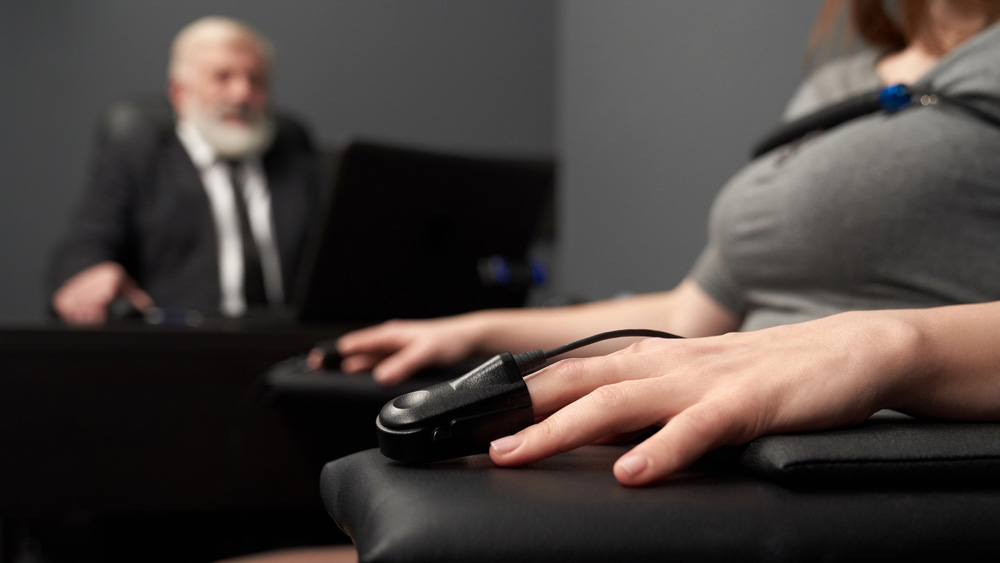
A polygraph examination records involuntary physiological responses — changes in breathing, blood pressure, and skin conductivity — while a subject answers a series of prepared questions. A trained examiner analyses the patterns across the full examination to form a professional assessment.
It is worth being clear about what a polygraph is and what it isn’t. It is a structured investigative tool, conducted to professional standards. It is not a machine that delivers a binary verdict. Results are presented as a professional assessment of probability, based on the data recorded. Any examiner who tells you otherwise is overstating what the process can deliver.
The questions are agreed in advance. There are no surprises on the day. The subject knows exactly what they are being asked before the examination begins.
When It May Be Appropriate
Polygraph testing works best when there is a specific question that needs answering and other means of resolving the matter have not been sufficient. It tends to come up in a handful of recurring situations.
Corporate and Employment Matters
Suspected theft, fraud, data breaches, or serious breaches of confidentiality can leave organisations in a difficult position — particularly when an internal investigation hasn’t produced a clear picture. Polygraph testing can form part of that process. It is also used in pre-employment screening for roles where a high degree of trust is essential.
Legal and Civil Proceedings
Solicitors sometimes commission polygraph examinations when the credibility of a particular account is central to a civil matter. We can provide reports in a format suitable for legal use, and we are happy to liaise directly with the instructing solicitor.
Relationship and Personal Matters
This is often the most difficult context in which to ask for help. If you are dealing with serious doubts about trust in a personal relationship, polygraph testing offers a way to address the matter in a controlled, neutral setting — rather than through conversations that have already gone in circles. We handle these cases with care and without judgement.
Insurance and Financial Disputes
Where a contested claim or financial matter turns on credibility, polygraph testing may be requested by one or both parties as part of gathering evidence.
📞 Immediate Contact: 0800 7734 889
📧 Secure Email: operations.uk.pi@gmail.com
💬 Text:

The Testing Process
We think it helps to know exactly what to expect before you commit to anything.
Initial Consultation
We start by talking through your situation — what has happened, what you need to establish, and whether polygraph testing is realistically likely to help. If we don’t think it’s the right approach, we’ll say so. If it is, we’ll explain the next steps and answer any questions you have.
Question Preparation
The questions used in the examination are drafted in advance and reviewed with you before the session takes place. This matters because the reliability of the process depends on asking the right questions in the right way. Vague, loaded, or compound questions don’t work well, and we’ll work through that with you during preparation.
Pre-Examination Interview
On the day, the examiner meets with the subject before anything begins. They explain the procedure, walk through what will happen, and give the subject a chance to ask questions. This stage also establishes a baseline — important for producing meaningful results.
The Examination
The examination is conducted in a calm, private environment. The subject answers the prepared questions while connected to the polygraph instrument. The process is methodical rather than pressured. Most examinations — including the pre-test and post-test stages — take between 90 minutes and three hours.
The Report
Once the examination is complete, the examiner analyses the data and prepares a written report. It sets out the questions asked, the responses given, the physiological data recorded, and the examiner’s professional assessment of what that data indicates. The report is suitable for use by solicitors, employers, or other relevant parties, depending on your situation.

Our Polygraph Experts operate across the UK & Abroad
Primary Operations: Greater London, Birmingham, Manchester, Leeds, Liverpool, Sheffield, Bristol, Newcastle, Nottingham, Glasgow, Edinburgh, Cardiff, Belfast, Southampton, Brighton, Oxford, Cambridge
Extended UK Coverage: All major urban centres and towns throughout England, Scotland, Wales, and Northern Ireland
International Capability: Available globally through our certified specialist network
UK Private Investigators – Your Security. Our Expertise. Total Discretion.
We accommodate consultations via Zoom, Microsoft Teams, Skype, and Google Meet for initial discussions.
Arrange a Consultation
If you’re not sure whether polygraph testing is the right step, the best starting point is a conversation. There’s no obligation to proceed, and we’ll give you an honest assessment of whether this service is likely to help with your specific situation.
📞 Immediate Contact: 0800 7734 889
📧 Secure Email: operations.uk.pi@gmail.com
💬 Text: 07399 884 635
Confidentiality and Professional Standards
Everything you share with us — from the first conversation to the final report — is handled in strict confidence. We do not pass information to third parties without your explicit instruction, and we are not in the business of disclosing sensitive matters beyond what the situation requires.
Our examiners are appropriately qualified and conduct examinations impartially. Their job is to run the process correctly and report what the data shows — nothing more, nothing less.
One thing we will not do is conduct an examination on someone who has not consented to it freely. If consent appears to have been given under pressure or under conditions of uncertainty, we will not proceed.
On the question of admissibility: Polygraph evidence is not admissible in criminal proceedings in England and Wales. It is used regularly in civil, employment, and private contexts, but if you are approaching this from a legal angle, we would recommend taking advice from your solicitor before proceeding. We are used to working alongside legal teams and happy to assist with that.

Polygraph Testing FAQs
How accurate is polygraph testing?
When conducted by a trained examiner following a structured methodology, polygraph examinations can produce meaningful and reliable results. But no examination is perfect, and we would never suggest otherwise. The findings should be considered as part of the overall picture, alongside whatever else is known about the situation.
Can the examination take place somewhere other than your offices?
In some cases, yes. If you need the examination conducted at your premises or a neutral location, raise it during the consultation and we’ll work out whether it’s practical.
What if the subject is anxious?
Being nervous is entirely understandable, and it doesn’t skew the results toward a finding of deception. The pre-test interview is there partly to address this. Examiners are experienced in distinguishing between general anxiety and the physiological patterns associated with deception.
Who sees the report?
Only the person or organisation who commissioned the examination. We do not share results with anyone else without your written authorisation.
Are the results legally binding?
No. They represent a professional assessment, not a legal judgment. How much weight they carry in a particular dispute will depend on the circumstances and the people involved.
What if someone tries to manipulate the results?
People do sometimes attempt countermeasures. An experienced examiner using a properly structured process is well placed to account for this — the preparation and pre-test stages are specifically designed with it in mind.
Can someone be made to take a polygraph test?
No. The examination requires the subject’s voluntary and informed consent. We will not proceed if that isn’t in place.
Book your Polygraph Test
Contact our team for confidential discussion and bespoke quotation addressing your specific polygraph requirements.
📞 Immediate Contact: 0800 7734 889
📧 Secure Email: operations.uk.pi@gmail.com
💬 Text: 07399 884 635
Contact the UKPI Polygraph Professionals
Professional Accreditations:
✅ Security Industry Authority (SIA) Licensed Investigators
✅ Association of British Investigators (ABI) Members
✅ Institute of Professional Investigators (IPI) Certified
✅ International Association of Security Professionals (IASP)
✅ World Association of Detectives (WAD)
Quality Certifications:
✅ TSCM Certified Specialists
✅ Government Security Cleared Operations
✅ ISO 27001 Information Security Compliant
✅ Data Protection Act 2018 Compliant
All services delivered in complete accordance with UK privacy legislation, GDPR requirements, and professional ethical standards.